Building Intelligence that Evolves with the World.
Fundamental innovation to build a new era of intelligence.
Rethinking How AI Works
We believe the most intelligent system will increasingly be one that interacts with the world. We prioritize efficiency, building systems that interact with the world, and learning in real time. We care deeply about product excellence because that's how we co-design for real-time feedback.
Our algorithmic research focuses on real-time adaptation and efficiency at scale.
Adaptive compute
On-the-fly alignment
Dynamic learning strategies
Generative interfaces
Efficiency
We are building a company where efficiency isn’t an afterthought, it’s the core principle guiding how our systems are designed, evaluated, and deployed.

Adaptive systems operate under strict limits including latency, memory, cost, and energy. We treat these constraints as first-class design inputs, not downstream considerations.

We co-design algorithms with hardware and serving constraints in mind, exploring new approaches within strict compute budgets.These constraints drive innovation.
Our Recent Work

Research
Understanding AI from the Inside: The State of Mechanistic Interpretability for AI Safety
Does understanding how models work actually make them safer? This survey explores whether studying the inner workings of neural networks can help researchers evaluate, predict, and control model behavior.

Research
AI Goes Mainstream: The Scaling Era and the Rise of Generative AI
Scaling powered the last five years of AI, but data and compute constraints are shifting the frontier toward reasoning. AI100’s third report maps how we got here and how generative AI is changing science, industry, and society.

Research
From Zero to Hero: Measuring Dataset Generation Abilities with Zero Seed Data
The research evaluates how well AI systems build training datasets from a description alone, testing Invent API against leading model APIs.

Research
The AI Observatory: A Public Measure of Real-World AI Use
Benchmarks and surveys don't show what AI assistants actually do. That evidence sits in a few proprietary reports. The AI Observatory brings real AI conversations into one public dataset, from seven sources, labeled under one common system.
Research
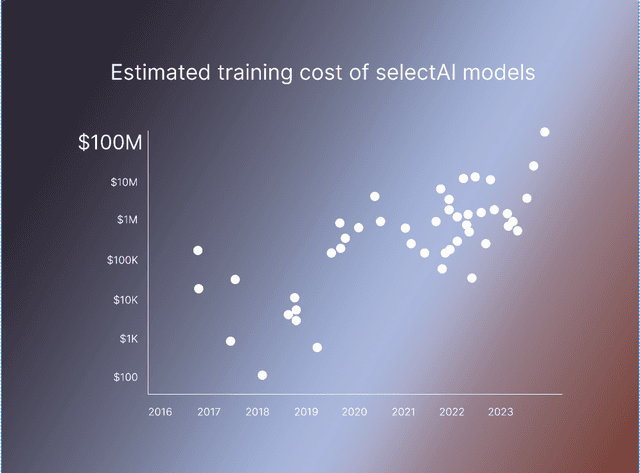
The Slow Death of Scaling
Our work is informed by research questioning the long-term effectiveness of brute-force scaling, including Sara Hooker’s essay, “The Slow Death of Scaling”, which highlights the growing constraints of compute, data, and energy.
Research
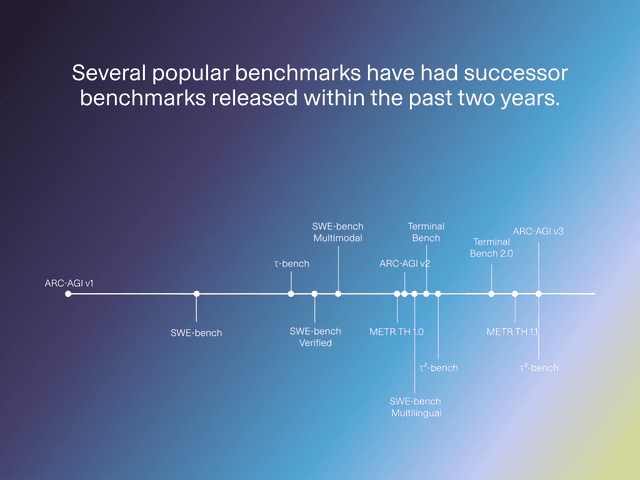
Open-world evaluations for measuring frontier AI capabilities
Standard benchmarks often miss what AI agents can actually do. This paper makes the case for open-world evaluations using long, messy, real-world tasks and introduces CRUX to run them regularly with qualitative analysis.
Our Research Recognized
Our team brings together backgrounds in language, video, machine learning, and perception. Collectively, we have authored
150+
publications across leading AI conferences.
We are always looking for passionate thinkers and doers to build alongside us.